
Phase 1: Base Preparation – The Invisible Foundation of a Certified Athletics Track
13. March 2026
In an athletics track, base preparation – whether asphalt or concrete – is one of the most critical phases of the entire construction process. It is no exaggeration to say that a poorly executed base will inevitably compromise the performance, durability, and certification of the final surface, regardless of the quality of the materials applied afterward.
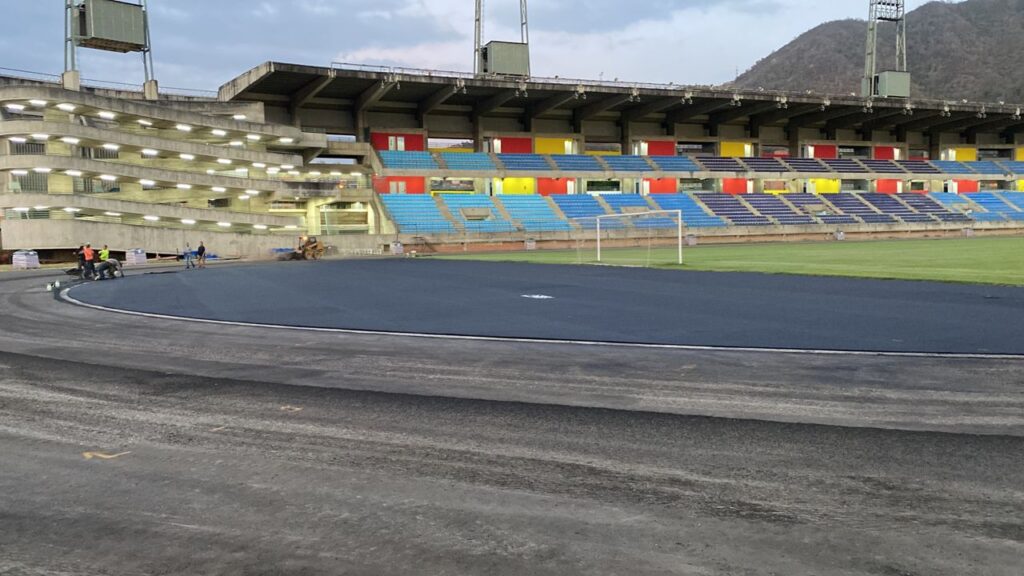
From the perspective of a manufacturer such as CONICA, whose systems are World Athletics certified, the base is not merely a structural support but a functional component of the complete system. It must meet very specific requirements in terms of planarity, regularity, slopes, mechanical strength, and homogeneity, as all subsequent layers are built upon it.
Technical Objective of the Base
The base must guarantee:
- Precise planarity, in accordance with regulatory requirements and taking into account not only athletics discipline requirements but also the position of drainage channels, outlets, and the thickness of the synthetic surface.
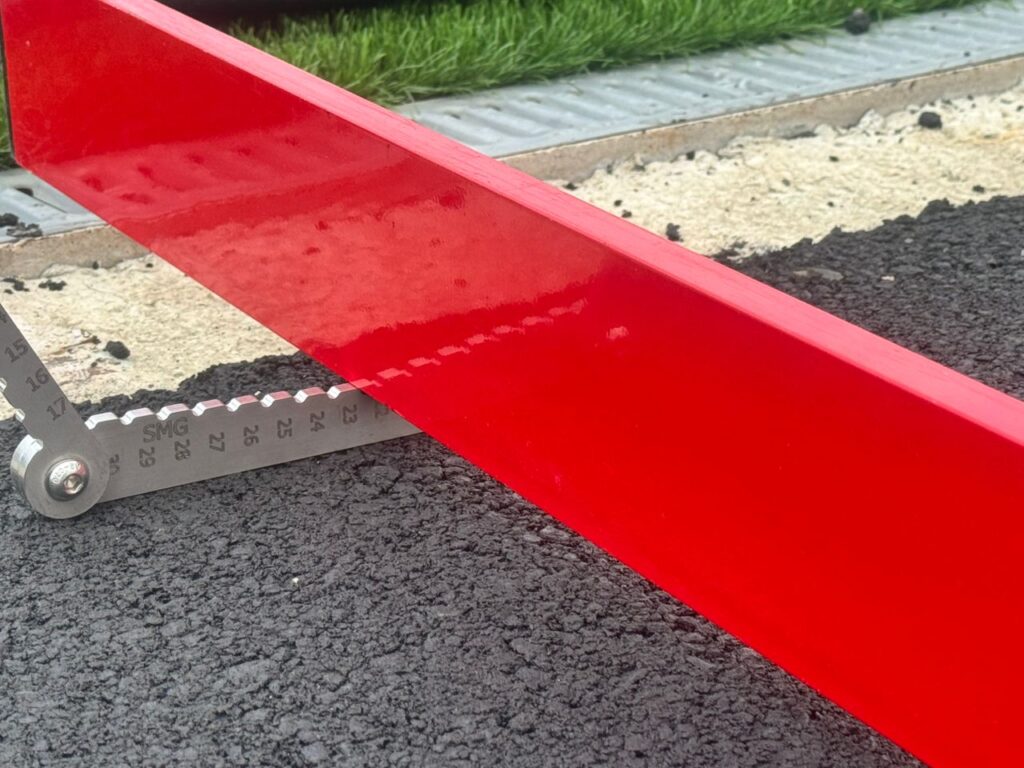
The tolerance must not exceed:- 3 mm measured with a 1-m straightedge, or
- 6 mm measured with a 4-m straightedge
- Correct slopes for water drainage, between 0.5° and 0.8° maximum, directed toward the inner edge of the track
- Adequate load-bearing capacity ≥ 1.5 N/mm²
- Homogeneous surface, free of weak areas or segregation
For certified athletics tracks, these conditions are non-negotiable. Any deviation results in variations in the thickness of the elastic and wearing layers, directly affecting key performance parameters of the sports surface installed later, such as:
- Shock absorption
- Vertical deformation
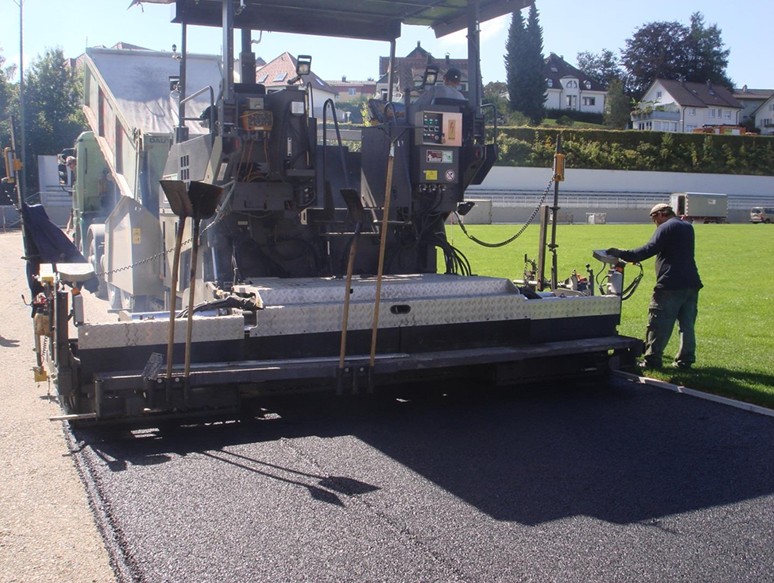
Asphalt and Concrete: Common Requirements
Whether the base is asphalt or concrete, the surface must be:
- Clean, dry, and free of contaminants
- Free of active cracks or loose material
- Mechanically sound
- Fully cured with controlled residual moisture (particularly critical for concrete), never exceeding 4%
For asphalt bases, the surface texture must allow proper adhesion while avoiding bitumen bleeding. For concrete bases, the slab must be fully cured and, if necessary, mechanically prepared using appropriate methods such as:
- Shot blasting
- Milling
- or other suitable preparation techniques
before continuing with the installation of the sports surfacing system.
Importance of Planarity and Surface Regularity
One of the most common mistakes is underestimating the importance of surface regularity and correct planarity.
With prefabricated track systems, the surfacing follows the profile of the base exactly, meaning that any irregularities will be replicated by the prefabricated rolls.
In contrast, in-situ installed systems can partially compensate for certain irregularities, although these tolerances remain limited by the installation requirements defined for the CONICA sports systems datasheet.
This highlights one of the major advantages of in-situ systems: a continuous surface, no joints, uniform mechanical behavior and perfect adaptation to the intensive use typical of athletics, including spike shoe traffic.
Asphalt: Types and the Importance of Proper Selection
Another decisive factor is the selection of the appropriate asphalt type depending on the sports surfacing system chosen.
Asphalt is typically the preferred base for athletics track installations and is an essential requirement for World Athletics-certified tracks.
Systems incorporating elastic base layers should generally be installed over permeable (porous) asphalt surfaces, which allow the evacuation of moisture that may accumulate within the elastic layer.
This is particularly critical for spray-coated systems, which are water-permeable, but it is also relevant for sandwich systems with elastic layer, which are the focus here. Later we will explain why and how any impermeable system (including prefabricated ones) can lead to moisture accumulation within the asphalt layer.
In America, porous asphalt is relatively uncommon, and asphalt bases are typically impermeable (non-porous). In such cases, selecting a permeable spray-coated track system is a poor choice, due to the amount of water and moisture that can remain trapped within the elastic base layer.
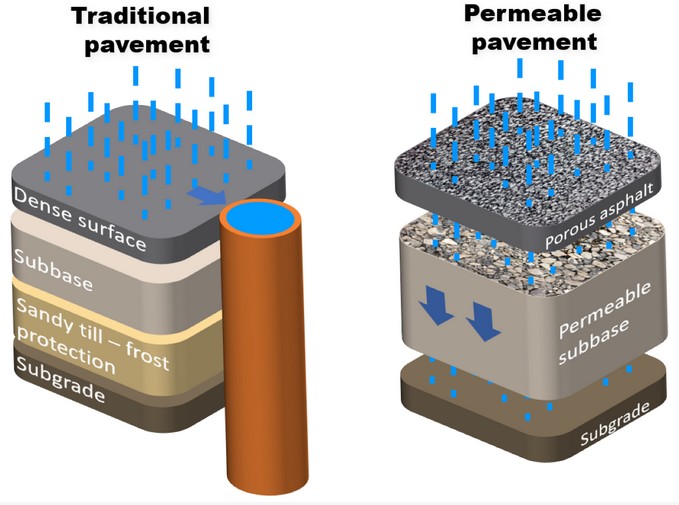
For sandwich-type track systems, which include an elastic base layer, and particularly in the common American scenario where asphalt is impermeable rather than porous, special attention must be given to:
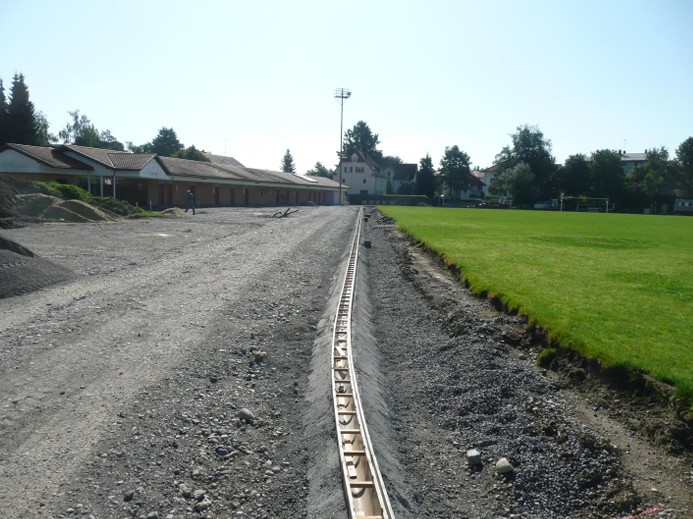
- The design of drainage channels
- Surface drainage systems
- Preventing unintentional moisture transfer beneath the track
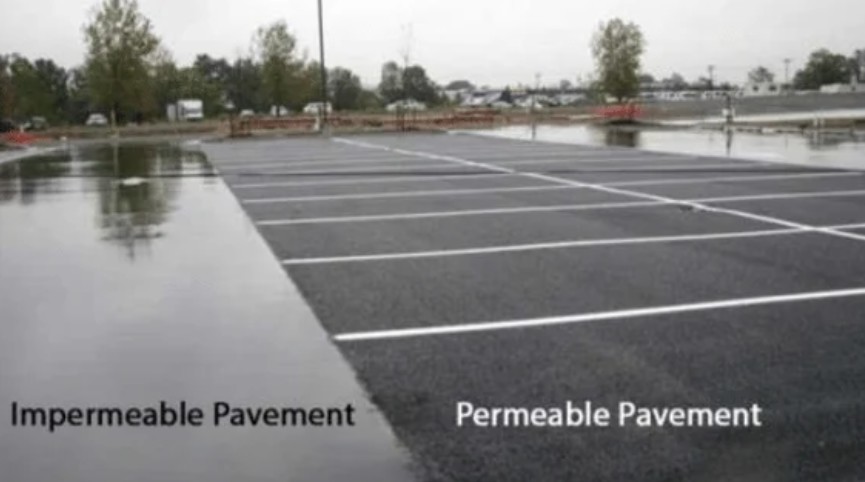
Examples include moisture transmitted by:
- Capillary action from adjacent natural grass fields
- Water runoff from nearby embankments
- Drainage or rainwater from adjacent pedestrian areas
In any case, the technical requirements for asphalt bases in athletics tracks strongly recommend the involvement of a contractor with proven experience in this type of asphalt works for athletics tracks, as the level of precision and technical control required demands specialized equipment and expertise, far beyond that needed for conventional asphalt construction.
Direct Relationship with Certification and Durability
A properly prepared base is essential for ensuring that the complete system:
- Complies with World Athletics requirements
- Provides correct shock absorption
- Prevents internal stresses and premature cracking
- Allows effective rainwater drainage
Certified Installers and Supervision
Installers trained by the manufacturer typically have normally the necessary experience to evaluate the condition of the asphalt or concrete base and determine any corrective actions required before installing the sports surface.
Only in this way can it be guaranteed that the base fully meets the requirements necessary for high-performance athletics surfacing systems, ensuring that the client gets exactly the athletic track they have planned.
Durability of Asphalt Bases
Although asphalt bases beneath athletics tracks are not usually subjected to significant static or dynamic loads, cracks and fissures may develop over time due to:
- Subbase vibrations
- Natural aging of the asphalt structure
- Surface-level degradation
For this reason, when installing a new athletics surface over an existing asphalt base, or when undertaking a complete track renovation, it is essential to first carry out a comprehensive assessment of the asphalt condition.
In most cases, it is recommended to perform rehabilitation/resurfacing of the upper asphalt layer, typically by surface milling and applying a new asphalt overlay layer.
This helps prevent cracks and fissures that could lead to moisture accumulation, structural instability and alterations in the sports surface performance.
CONICA Commitment
At CONICA, unlike other manufacturers, our commercial team does not simply focus on selling polyurethane by kilograms.
We actively engage with our clients locally in the development and supervision of projects from start to completion, delivering the highest quality sports surfacing systems.
This commitment is why we have been – and continue to be – a benchmark for quality for more than 40 years.
Because in athletics, as in sports surface construction, the details may not be visible… but they are felt in every stride.
Coming Soon
In the coming days we will publish the next chapter of this series:
Step-by-Step Construction of an Athletics Track
Phase 2: The Primer – The Bonding Bridge that Ensures System Integrity
A layer that may appear simple, but is absolutely critical as the bonding interface between the base and the elastic structure of the system.
By Jose Antonio Perez, CONICA Regional Manager America & Caribbean

Weltklasse Zürich Lives Up to Its Name – The Night Records Fell on CONICA’s Piste Magique
ZÜRICH, SWITZERLAND – AUGUST 27: The podium at Diamond League: Weltklasse Zürich on August 27,…
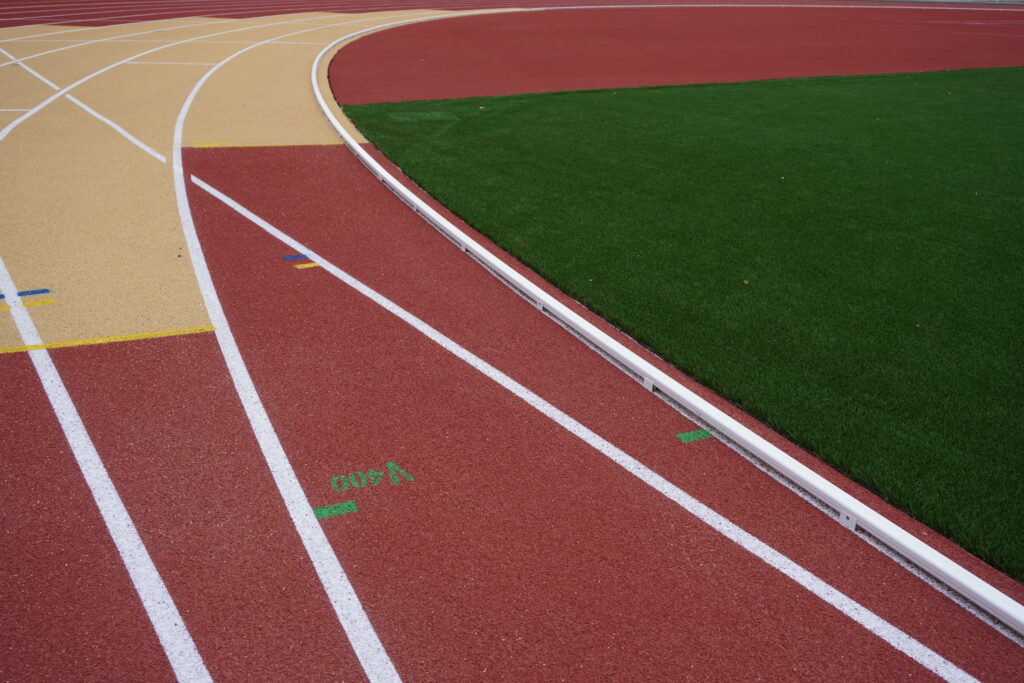
Phase 6: optional UV sealing coat, line marking and the official markings for each event. Where world records are ratified.
Optional UV sealing of the surface Some granule colours are more sensitive to UV radiation…
Phase 5: the top self-levelling coating and EPDM. Where the system finally becomes a sports surface
From the perspective of a manufacturer such as CONICA, whose systems are certified by World…

A World Record Night on CONICA’s CONIPUR Vmax Track in Monaco
The Stade Louis II once again provided the setting for an exceptional night of international…
Phase 4: The Pore Sealer
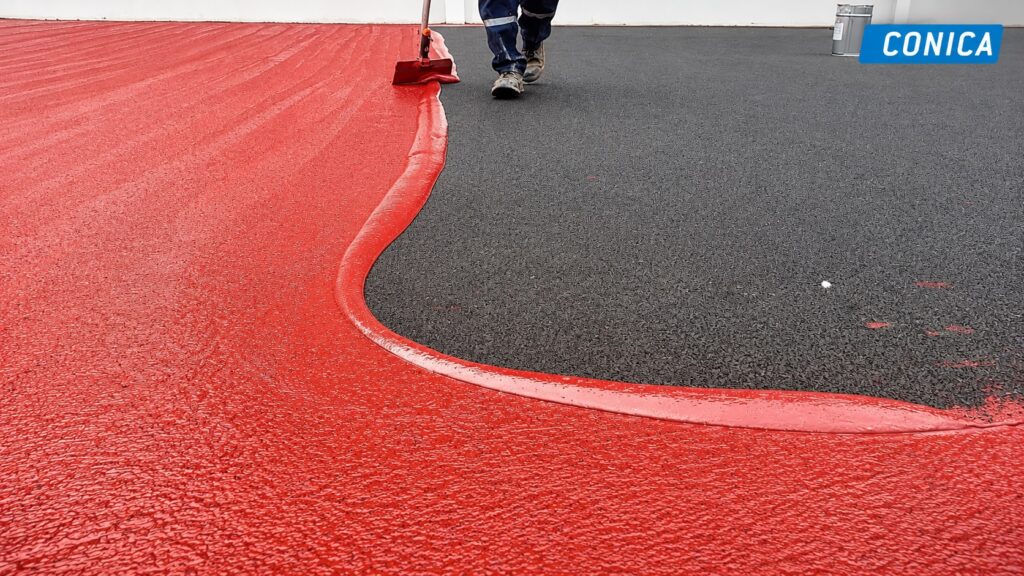
Sealing, impermeability and system continuity Pore sealers are used in all sports surfacing systems with…
A New CONICA Athletics Track Beneath the Žižkov Television Tower in Prague
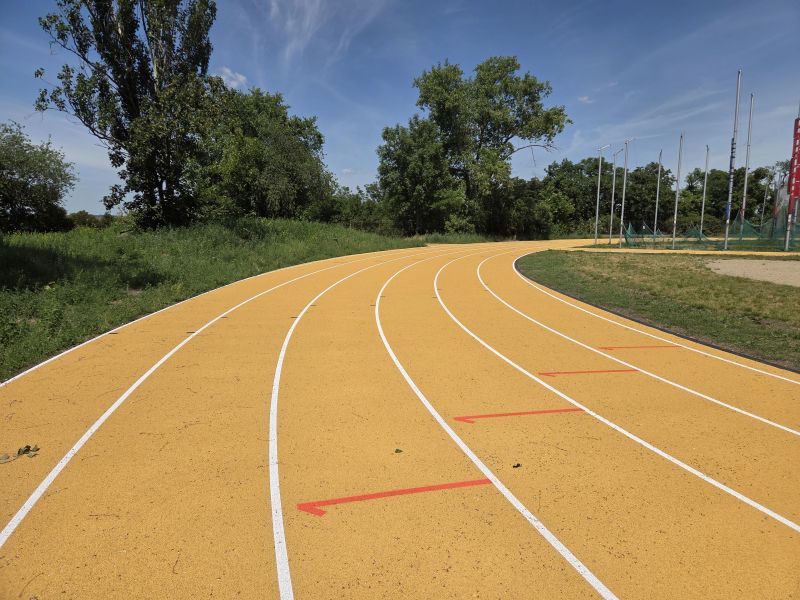
The project features the CONIPUR SP sports surface from CONICA, a proven system designed for…
If you are interested in this type of technical content related to sports surfacing, follow us on LinkedIn to stay up to date.
To learn more about certified in-situ systems, retopping solutions and high-performance sports surfaces, follow CONICA or visit our official channels.
Conica has been developing and manufacturing innovative seamless flooring solutions based on polyurethane and epoxy resins for sports, games, leisure as well as other areas for over 40 years. Conica is one of the world’s market leaders and innovation drivers in this field. The user-oriented requirements for technical and sports functional performance as well as usability while guaranteeing health aspects of the material itself and for the user are the focus of product development. Conica is part of the Serafin group of companies based in Munich.