
Phase 4: The Pore Sealer
13. July 2026
CONSTRUCTION OF AN ATHLETICS TRACK STEP BY STEP by José Antonio Pérez – CONICA Regional Manager Latin America & Caribbean
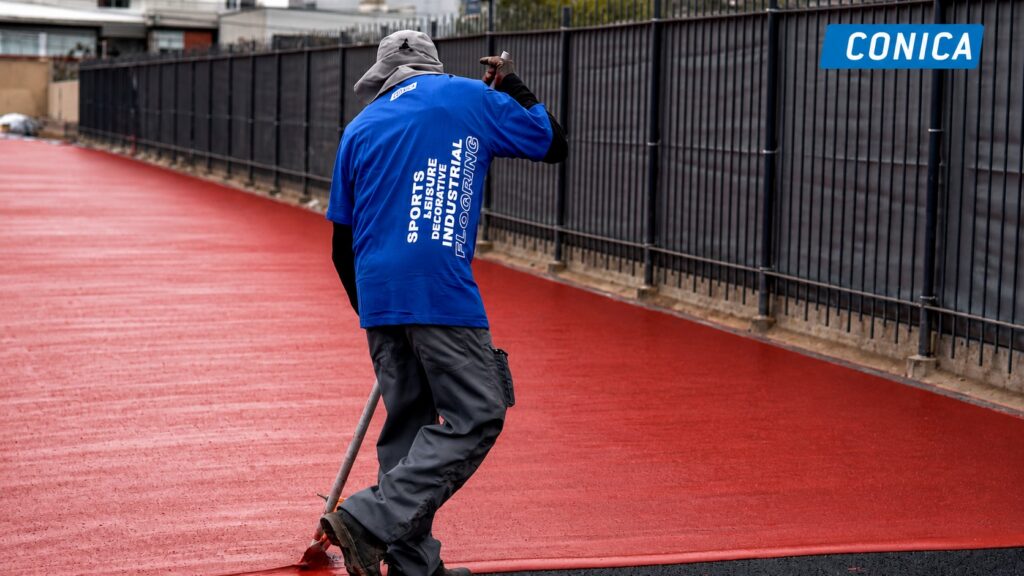
Sealing, impermeability and system continuity
Pore sealers are used in all sports surfacing systems with elastic bases where impermeability of the final system is required. They are present in a wide range of sports and recreational flooring systems, both outdoors and indoors, including CONICA’s multifunctional systems with a smooth finish, such as CONIPUR HG, indoor playground safety surfaces and, of course, impermeable athletics tracks with an elastic base — the specific case we are analyzing through sandwich-type athletics track systems.
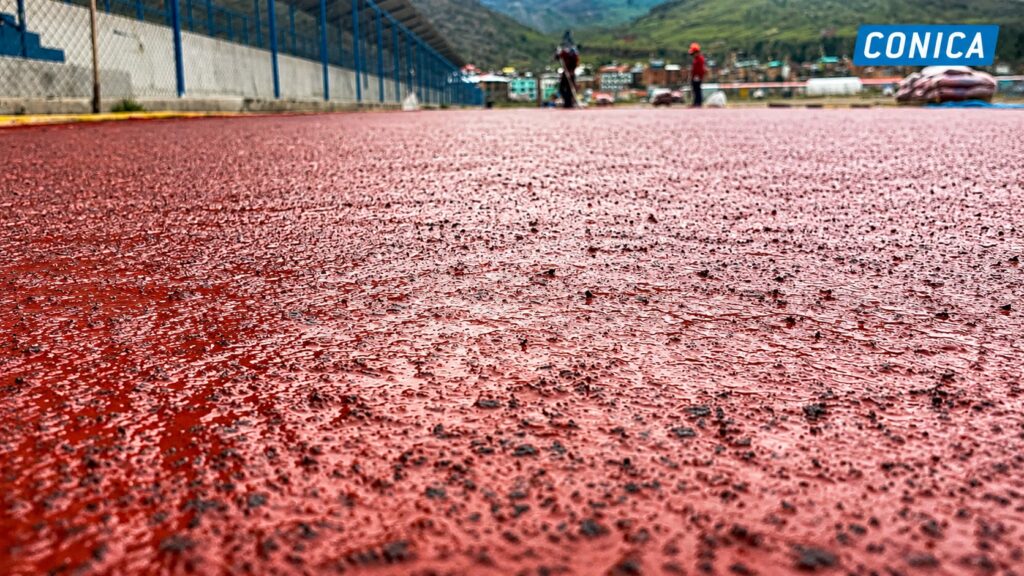
Once the elastic base has been installed, the next phase in the construction of an in-situ sandwich athletics track system is the application of the pore sealer. This layer is often underestimated, but from a technical standpoint it is essential to ensure the impermeability of the system and the proper adhesion of the wearing layer.
In World Athletics-certified systems, such as those developed by CONICA, the pore sealer is not an optional layer, nor is it simply a superficial filler. It forms part of the system design and performs very specific technical functions that directly influence the performance and durability of the track.
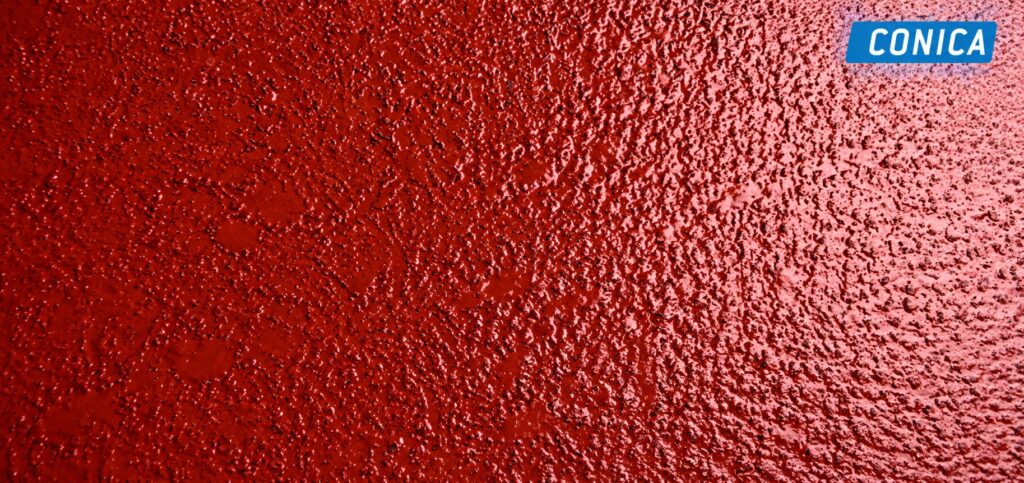
Technical function of the pore sealer
The pore sealer has three main objectives:
To seal the inherent porosity of the SBR elastic base. Elastic bases made from SBR granules achieve good shock absorption thanks to the recycled rubber material and the air voids that are created between the granules once they are bound together. The larger the granulometry, the larger the air voids are generated. This is why, when installing the elastic base, it is important to achieve a proper granulometric balance in the SBR granulate. However, once the elastic base is complete, the surface voids must be sealed.
To provide impermeability to the system by preventing water penetration. In addition to homogenizing the surface of the elastic base, the pore sealer creates an impermeable layer within the system. As a result, when the final technical self-levelling polyurethane coating is installed, there is no unexpected absorption of the coating into the substrate, and the specified thickness indicated by the manufacturer can be achieved.
To create a suitable adhesion bridge with the self-levelling wearing layer. Technical pore sealers, such as those used by CONICA, also provide the surface of the pore-sealing layer with an adhesion-promoting property that creates a bond with the subsequent self-levelling coating, provided that the indicated recoating intervals are respected — generally
a maximum of 48 hours. This is why it is important to proceed in phases and to coordinate the installation teams properly so that this interval is fully utilised. Otherwise, the adhesion bridge may be lost, as can also occur in the event of rain, and an additional primer would then be required to recreate the bond between the pore sealer and the final coating.
It is therefore not an optional installation stage, because a correctly installed elastic base inevitably has an open structure. If this porosity is not sealed homogeneously, the wearing layer may lose material, present irregular thicknesses or develop adhesion problems in the medium term.
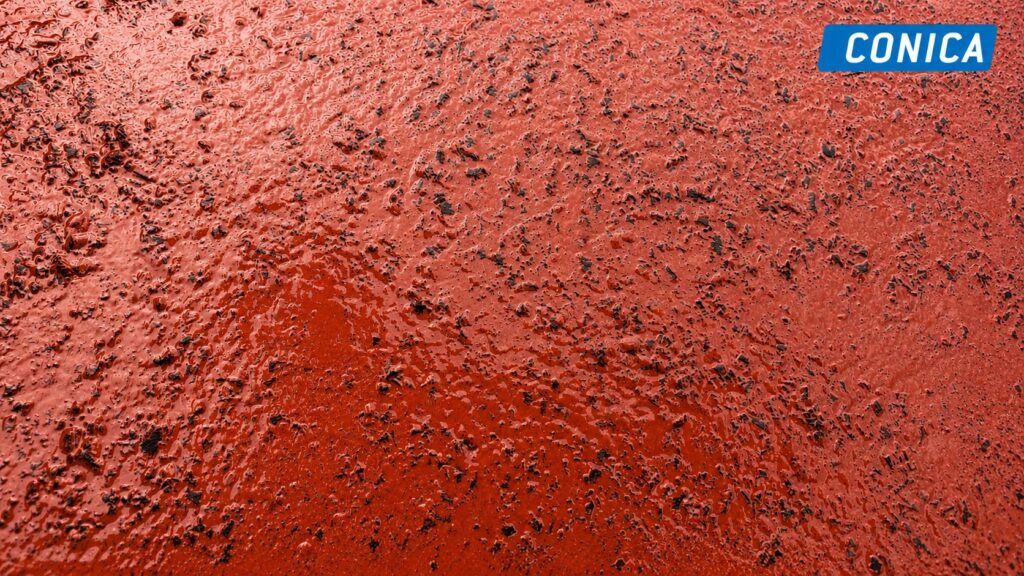
Importance of product quality
The pore sealer must be a high-quality product, specifically formulated for in-situ athletics track systems. Its viscoelastic behavior must allow for:
- Controlled application
- Adjusted and homogeneous consumption
- Effective sealing without excessively closing the surface
The use of generic products or low-quality formulations can result in fragile surfaces, insufficient sealing or chemical compatibility problems with the subsequent layer. Once again, the manufacturer’s complete system approach makes the difference compared with improvised solutions. In CONICA systems, the pore sealer applied over SBR elastic bases is CONIPUR 2400, widely recognized by clients and professional installers for its very low consumption per square meter, ease of application and outstanding working window.
Correct application and consumption control
The pore sealer is generally applied using a flat squeegee, rubber applicator or specific machinery, always aiming for uniform distribution, the absence of material build-up and adequate penetration into the SBR structure.
Consumption must be adjusted according to the actual porosity of the elastic base. Under-application leaves open pores and compromises impermeability. Over-application can create surfaces that are too closed or irregular, negatively affecting adhesion and the final density of the wearing layer.
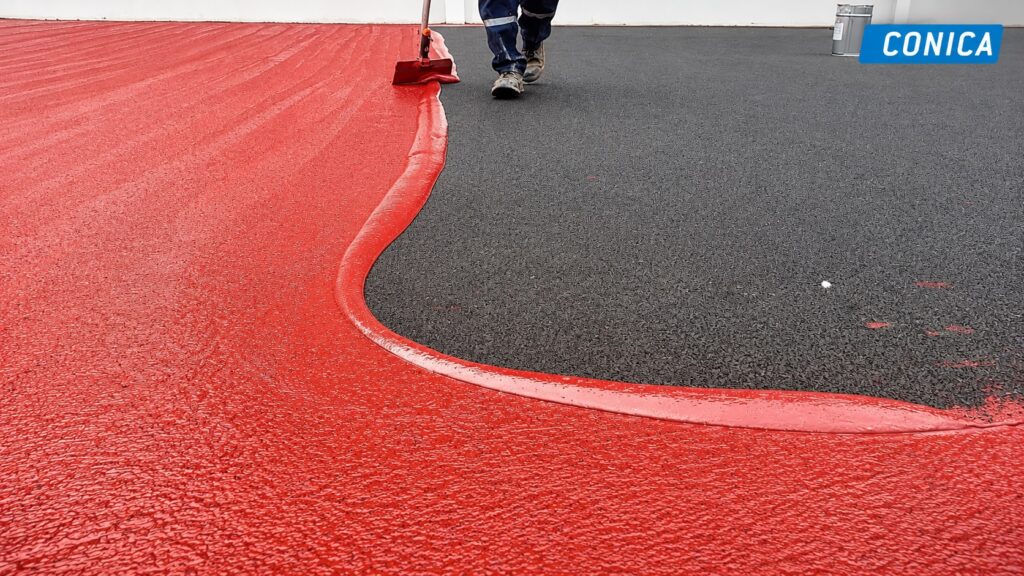
Application intervals and environmental conditions
As mentioned above, one of the most critical aspects of this phase is strict compliance with the application intervals. The self-levelling layer must be applied within the time window recommended by the manufacturer in order to ensure optimal chemical adhesion with the final self-levelling coating layer.
If these intervals are exceeded, or if the sealed surface has been exposed to rain or humidity, adhesion must be assessed and, where necessary, an additional intermediate primer must be applied. This type of control is standard practice in properly executed in-situ systems and forms part of a professional approach focused on the durability and quality of the overall system. Otherwise, peeling or disaggregation of the upper coating layer may occur within a short period of time.
Relationship with durability and retopping
A correctly applied pore sealer is key not only to the initial performance of the track, but also to its future ability to receive retopping treatments. By ensuring an impermeable and stable base, it facilitates the renewal of the top layer without the need for deep interventions, significantly extending the service life of the installation.
Certified installers and manufacturer control
As with the other phases, the correct execution of the pore-sealing layer requires trained and certified installers working under the supervision of the system manufacturer. Only in this way can it be guaranteed that the system installed on site truly corresponds to the system tested and certified by World Athletics.
Although the pore sealer remains hidden beneath the final layer, its influence is decisive. As mentioned in the first chapter when discussing primers, it is one of those layers that cannot be seen, but which makes the difference between a durable, correctly installed athletics track and one that may generate problems in the short and medium term.
In the next publication, we will address Phase 5: Application of the self-levelling coating and broadcast of EPDM granules – the layer that defines the sports performance and the athlete’s experience.
If you are interested in this type of technical content about the world of sports surfaces, follow us on LinkedIn and stay up to date.

Weltklasse Zürich Lives Up to Its Name – The Night Records Fell on CONICA’s Piste Magique
ZÜRICH, SWITZERLAND – AUGUST 27: The podium at Diamond League: Weltklasse Zürich on August 27,…
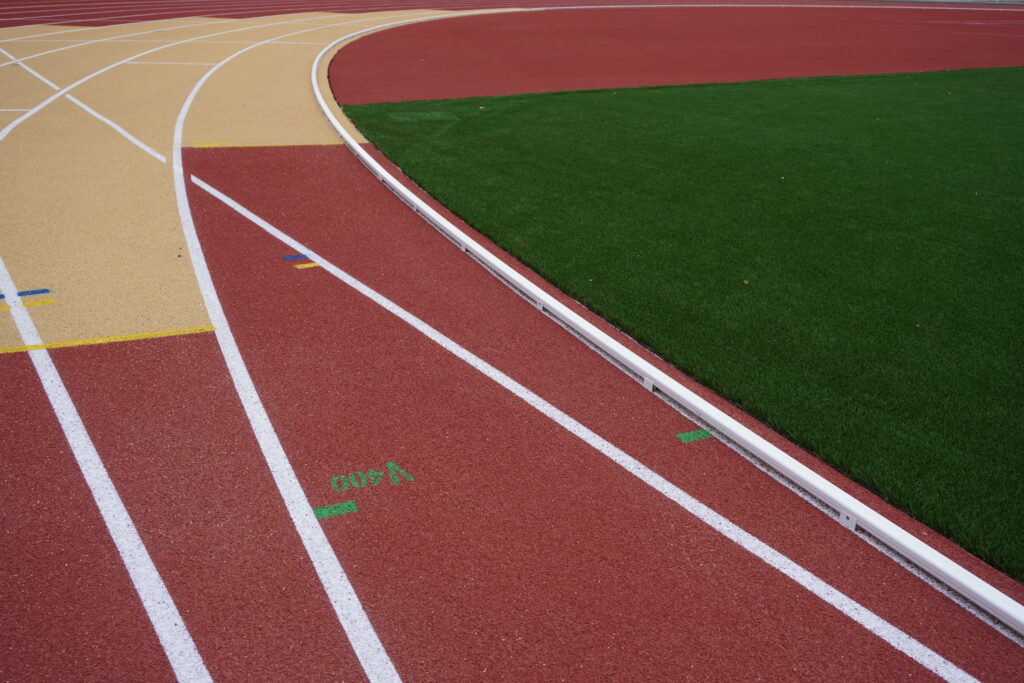
Phase 6: optional UV sealing coat, line marking and the official markings for each event. Where world records are ratified.
Optional UV sealing of the surface Some granule colours are more sensitive to UV radiation…
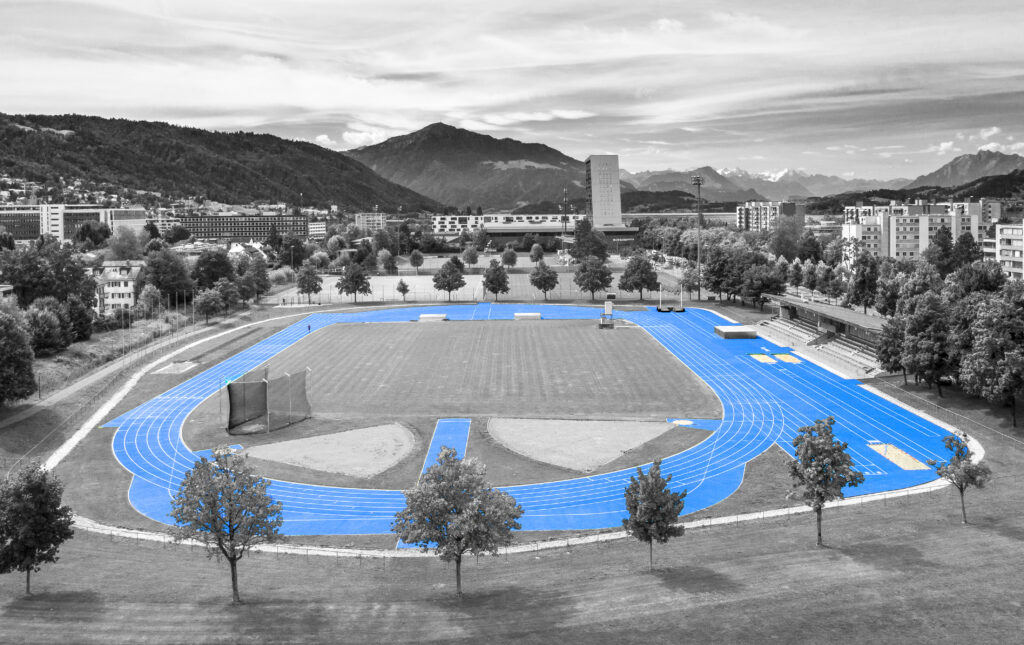
Phase 5: the top self-levelling coating and EPDM. Where the system finally becomes a sports surface
From the perspective of a manufacturer such as CONICA, whose systems are certified by World…
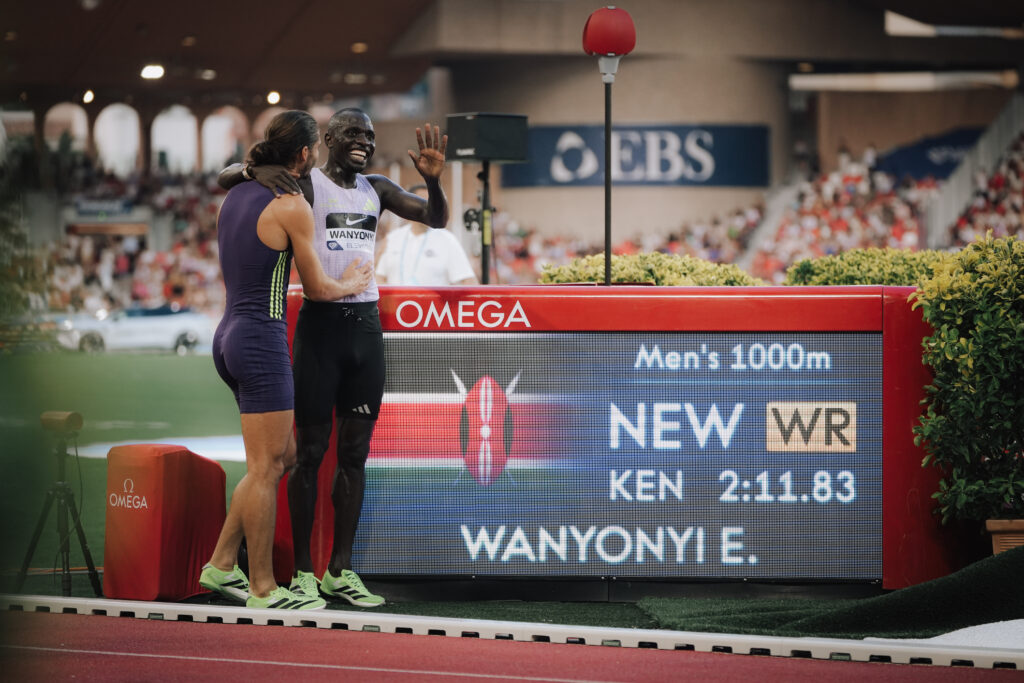
A World Record Night on CONICA’s CONIPUR Vmax Track in Monaco
The Stade Louis II once again provided the setting for an exceptional night of international…
Phase 4: The Pore Sealer
Sealing, impermeability and system continuity Pore sealers are used in all sports surfacing systems with…
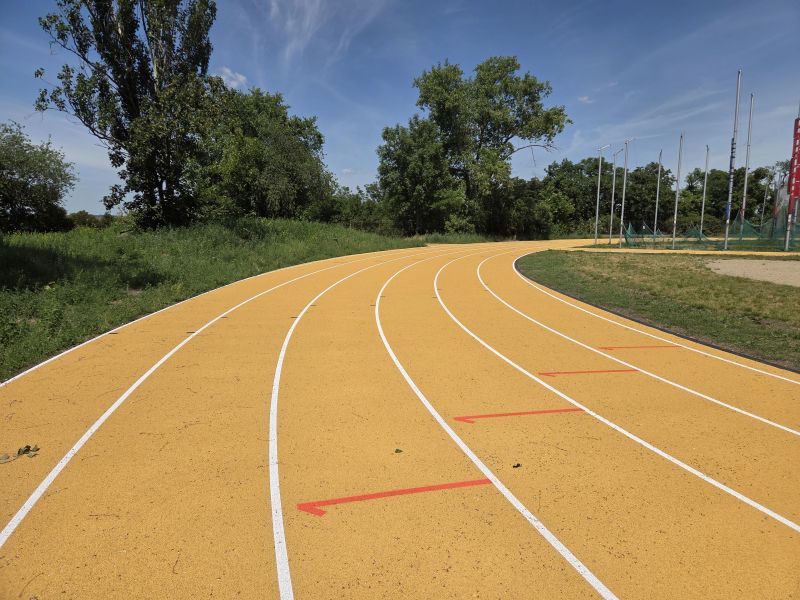
A New CONICA Athletics Track Beneath the Žižkov Television Tower in Prague
The project features the CONIPUR SP sports surface from CONICA, a proven system designed for…
Conica has been developing and manufacturing innovative seamless flooring solutions based on polyurethane and epoxy resins for sports, games, leisure as well as other areas for over 40 years. Conica is one of the world’s market leaders and innovation drivers in this field. The user-oriented requirements for technical and sports functional performance as well as usability while guaranteeing health aspects of the material itself and for the user are the focus of product development. Conica is part of the Serafin group of companies based in Munich.